What Is Commercial Property Insurance & Why Do You Need It?
By Sagar Narang
What Is Commercial Property Insurance & Why Do You Need It?

Commercial property insurance is a type of insurance that protects business property. It helps business owners if something goes wrong with their office shop or building. 

Table of Contents

Toggle

This insurance is important because it protects companies from significant financial losses. In the event that a building is destroyed by fire, items are stolen, or a storm damages property, the business property insurance helps cover the cost of repairs or replacement. 

It also covers things like equipment, furniture, and inventory. A company may not be able to recover from a big loss without this insurance. 

Thus, insurance for commercial property provides comfort and keeps the company’s operation smooth even after unexpected problems.

What Is Commercial Property Insurance?

Commercial property insurance is an insurance that protects the physical assets of a business, which includes buildings, equipment, machines, tools, furnishings, and inventory.

It covers both owned and rented commercial spaces. For example, this insurance helps cover the cost of repairing or replacing the items if they are lost or damaged due to theft, fire, or natural disasters.

Renters’ or homeowners’ insurance is not the same as commercial property insurance. Commercial property insurance is exclusively for businesses, whereas homeowners’ or renters’ insurance covers personal residences and possessions. 

It helps businesses continue operating even after damage or loss and protects them from big financial losses. No matter the size of the business, this insurance is very helpful. Hence, Business property insurance ensures your valuable business assets are always protected.

What Does Commercial Property Insurance Cover?

Commercial property insurance helps protect various parts of the business. Building coverage is the first thing it covers. This means that the insurance will help with the cost of repairs or rebuilding if a fire, storm, or other covered event damages your office store or building. 

Second, it includes personal property owned by businesses. This covers items found within your building, such as computers, furniture, equipment, and inventory. If these things are stolen or damaged, the business property insurance helps replace them.

Third, income loss might be covered. Insurance can help in covering the lost revenue if your company has to be closed because of the damage (such as a fire). There are other coverages as well. A basic policy might not cover certain risks such as earthquakes, floods, or vandalism. 

To cover these, you might need to add specialized protections called endorsements. Your business remains safe and operational because of this business property insurance. 

Why Do You Need Commercial Property Insurance?
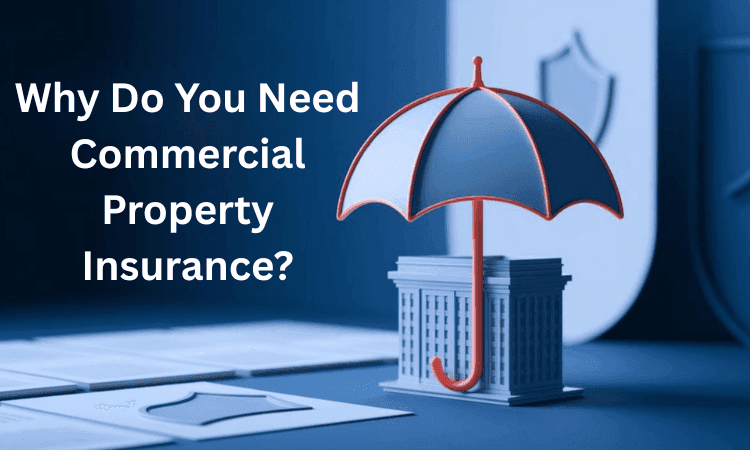
property insurance

Commercial building insurance is important because it safeguards the capital you have invested in your company. The cost of inventory, buildings, and equipment is high. If something like theft or fire happens, insurance helps you recover without suffering significant losses. 

Many lenders, like banks and landlords, ask for this insurance. If you rent a space or take out a loan, they want to make sure the property is covered and safe.

This insurance also helps your company stay open after a disaster. Insurance can help you repair and reopen your business more quickly if it is damaged. It may also cover legal issues in certain situations. You can rest easy knowing that your business is protected in many ways by having Commercial building insurance.

How Much Does Commercial Property Insurance Cost?

Many factors influence the price of commercial property insurance. The location of your company is one important consideration. It might be more expensive if there is a lot of crime or flooding in your area. 

The price is also influenced by the worth of your equipment and property. Insurance rates are higher for more costly items. The cost is also affected by other factors such as deductibles like the amount you pay before insurance helps and coverage limits i.e the amount of protection you desire

The cost is typically higher for higher coverage and lower deductibles. The cost may vary based on the type of business you run. You can install sprinklers or alarms to reduce risk and save money. 

Additionally, you can receive discounts by purchasing policies (such as liability and property insurance) from the same provider. This helps lower your insurance premium 

How to Choose the Right Commercial Property Insurance?

It is important for your company to select the appropriate Commercial building insurance. At Policywings, we provide the best and right commercial property insurance as per your needs. 

You should start by examining the risks that your company faces. Knowing your risks, such as whether or not any expensive equipment that you own or whether your area is vulnerable to theft or flooding, will help you select the appropriate coverage. 

Next, evaluate various insurance plans and providers. Some might provide more coverage or better rates. Make sure the option offers adequate protection before selecting the cheapest one. 

It’s also important to understand what is excluded from the insurance policy. They are referred to as limitations or exclusions. For instance, certain policies might not provide coverage for earthquakes or floods unless you purchase additional insurance. 

Working with an insurance broker or agent is an additional option. They are professionals who can guide you through the choices and help you select the best small business insurance policy for your company. A solid insurance plan offers protection and peace of mind.

Conclusion

At Policywingsgs, we understand that your business is built on more than just ideas; it’s built on valuable assets like furniture, equipment, and inventory. Hence, every business needs commercial property insurance. It protects your business against any dangers like fire, theft and natural disasters, protecting your building equipment and other valuables. 

This insurance helps prevent financial losses and maintain the smooth operation of your business, regardless of whether you own or rent your workspace. In difficult times, it also helps you by paying for lost wages or legal fees. 

Knowing what is covered, evaluating your options, and comprehending your risks are all necessary for selecting the best policy. An insurance agent can also be of assistance. 

Policywingsgs commercial building insurance provides your company with strong protection and peace of mind. For any business owner, it is a wise and essential step. 

FAQs on Commercial Property Insurance

  • What’s the difference between commercial property insurance and general liability insurance?

Your company’s assets, including buildings, furniture, and equipment, are covered by commercial property insurance. On the other hand, if someone is injured at your place of business or if you cause damage to another person’s property or any legal fees are covered by general liability insurance. Both are necessary for complete company protection under small business insurance

  • Does commercial property insurance cover natural disasters?

Typically, fire, wind, and storms are covered by standard commercial property insurance. However, it might not include earthquakes or floods. You will need to purchase additional protection for those. Know which disasters are covered and which are not by always checking your policy.

  • Can I get coverage for leased business space?

For a rented office or shop, you can obtain small business insurance even if you do not own the building. It can include any upgrades you made to the area as well as your furniture, equipment, and supplies. This lessens the risk of losses for your company.

  • What’s not covered by commercial property insurance?

Over time, normal wear and tear or damage is not covered by commercial property insurance. Additionally, unless you purchase additional coverage, it won’t cover employee theft or certain natural disasters like earthquakes or floods. For a complete list, always refer to your policy.

  • How do I file a commercial property insurance claim?

Inform your insurance provider of the damage as soon as you can in order to initiate a claim. Document what was lost or damaged, take pictures and save receipts. Complete the provided claim form and collaborate with their staff to process it.

Share this article:

Key Services

What Makes us different from other platform?

Policywings.com is operated by Policywings Insurance Broking Services Private limited. It is duly licensed by IRDAI under its broking regulations.

At Policywings, we wish to simplify and de-jargonise Insurance

Blog

Our Blogs

Practical tips, guides, and insights to help you make smarter insurance decisions for yourself and your family.

Car Insurance Claim Process in India: Step-by-Step GuideClaim

Car Insurance Claim Process in India: Step-by-Step Guide

Whether it’s a little scratch or a big accident, a car insurance claim can save time, money and a lot of unnecessary stress. Sadly, filing a car insurance claim seems like a complicated task to a lot of people. They tend to get all blank when the situation arises. When in reality, it’s just a simple process. Once you know what to do and when, you will have your vehicle back on the road faster. Here, we will discuss how to get the most benefit of your insurance and what a well-handled claim actually looks like. Step 1: First, Ensure Safety Before you get straight to thinking about insurance, just make sure that everyone is safe around you. If possible, move the car to a safe spot Switch on hazard lights If anyone is injured, call for medical help There is nothing bigger than personal safety. The ‘claim’ part should come later. Step 2: Immediately Inform the Insurance Company Once you have the situation under control, it’s time to inform your insurer. Most insurers let you contact them through a customer care helpline, mobile app or website, writing an email or simply by visiting the branch. The earlier you inform, the better your insurer can guide you and speed up the process. Step 3: File an FIR In certain situations, you need to file an FIR. It could be after: The vehicle gets stolen There has been a major accident involving injury or death There is physical or property damage to third party If there are only minor damages, insurance providers usually don’t ask for an FIR. Still, you must always confirm with your provider. Step 4: Document the Damage A claim settlement can become much smoother if you have proper documentation in place. Your insurer may ask you to: Take clear photos or videos of the damaged vehicle Provide the date, time and location details of the incident Share basic details of what exactly happened This step is where you exchange proofs that help the insurer assess the claim accurately. Step 5: Vehicle Inspection by Surveyor After you have informed your insurer about the claim, the insurance company then appoints a surveyor who will come to inspect the vehicle. Depending on the insurer and severity of the damage, inspection may either happen physically at the garage or can even be done digitally through photos/video calls. A reliable motor insurance provider will make sure that inspections are timely done because delays can slow the entire claim process. Step 6: Repair at Network Garage or Preferred Garage You now have two options for the repair work: Cashless Claim (Network Garage): You can take your car to an authorised garage to fix it. Your Insurer settles the bill directly with the garage and you only have to pay for deductibles and non-covered items. Reimbursement Claim: You make an upfront payment for the repair bill and submit invoices and documents to the insurer. For this, you will be reimbursed later. This step becomes much easier when your policy is backed by an extensive network of garages. Step 7: Claim Settlement Once all repairs are done and documents are verified, you can relax. The insurer will settle the claim. The final amount depends on the coverage amount of the policy, deductibles and depreciation. If you have bumper to bumper insurance, depreciation is not a stress. An honest insurer will clearly explain if there will be any deductions. This really builds trust in the process. Step 8: Delivery of Vehicle After the settlement is done, the garage releases your vehicle and you can thoroughly inspect the repairs before taking your vehicle home. This is the stage when your claim is considered closed. How Add-Ons Affect the Claim Experience Add-ons are often very helpful and make your policy stronger. They can really make the claim process smoother for you. Let’s take examples: Zero depreciation (bumper to bumper insurance): Reduces depreciation deduction on parts Roadside assistance: Helps a lot during claims related to breakdowns Similarly, there are other add-ons. While they lightly increase premiums, they also simplify the claim experience. Common Reasons Why Claims Get Delayed or Rejected Here is the most important part. Some people complain that their claim wasn’t settled or that there have been issues. But this is because they made these mistakes: They were late for claim intimation Their documents were incorrect or incomplete Driving under the influence (eg. Alcohol) Policy had expired at the time of the incident A policy alone won’t solve things for you. While filing a claim, make sure you follow the right process whether you have the cheapest insurance for car or an expensive one. Why Claim Support Matters More Than Premium Premium is surely an important part of buying car insurance. However, the real test of a policy is during a claim. When claim support is strong, it means: Claim intimation is very easy Inspections are done faster Clear communication at each step Settlements are done on time Conclusion In India, the car insurance claim process is pretty structured. But your experience will largely depend on how informed you are about the process and how supportive your insurance provider. Keep in mind all the discussed steps because they will put you in control. Whenever something unexpected happens, you know what to do next. At the end, good car insurance not only protects your vehicle but also supports you in need.

Written bySagar NarangPublished onJanuary 23, 2026
Third Party vs Comprehensive Car Insurance – Which Should You Buy?Car Insurance

Third Party vs Comprehensive Car Insurance – Which Should You Buy?

Introduction At the time of renewing or buying car insurance, people generally have two main options in front of them. Either to go for third party insurance or choose a comprehensive policy. While one is cheaper, the other offers better protection. The question here is which one do you really need? At first glance, the cheaper option may seem more attractive but the real decision isn’t only about price alone. It’s about how much risk you can take, usage of your car and how much are you ok to spend after an accident. Basically, you should ensure what you’re actually protected against. If you are at the decision stage, confused how to go ahead, we will help you choose the one that make the most sense for your car so you can make a confident decision. Understanding the Two Types of Car Insurance What Is Third Party Car Insurance? For the car owners in India, this is the minimum legal requirement and should be taken very seriously. If, because of your car, there is any kind of damage or injury to another person, vehicle or property, it will be covered. In short, it does not cover: Damage to your own car Theft of your car Your car damaged by fire or flood It is also known as a third party liability insurance policy and it is a legal requirement to bring your car on the road in India. And since it only covers the other people and their assets, it’s also the cheapest insurance for car. What Is Comprehensive Car Insurance? This car insurance goes a lot further in terms of benefits and covers: Third-party damage (as a mandatory part) Damage caused to your own car due to any accident Theft of car or destruction by fire, floods and natural disasters Further, you even have the option to enhance it with some amazing add-ons like bumper to bumper insurance, engine protection and roadside assistance. These features are very useful and can significantly reduce your expenses at the time of making claims. Third Party vs Comprehensive: The Real Difference So, the easiest way to understand how these two insurances differ this: Third party insurance is designed to protect others from your car Comprehensive insurance promises to protect both others as well as your car When you have third party insurance, you only meet the legal requirement but with comprehensive car insurance, your financial exposure is a lot lower after an accident happens. Is the Cheapest Insurance for Car Always the Right Choice? It’s understandable why so many buyers choose the cheapest insurance for car is especially when it’s time to renew. However, low cost and always mean it’s a safer option. If you have a basic third-party insurance: Any damage to your car will be settled entirely from your own pocket Even minor accidents can lead to high repair bills There would be zero compensation on case of theft or flood damage Yes, there is a higher upfront cost in comprehensive car insurance but it also reduces a lot of unexpected expenses later. Where Bumper to Bumper Fits In Bumper to bumper insurance is surely one of the biggest reasons why people upgrade to comprehensive cover. In regular policies, insurance providers generally apply depreciation during claims on parts made of plastic, rubber and fibre. Hence, you still pay a share of total repair costs. Having bumper to bumper means: Depreciation deductions are minimal or even none at all Your pay much lower out-of-pocket expense after an accident Claims feel a lot less stressful and more expected Overall, this add-on is especially useful for new cars and those who drive in busy cities. Which One Should You Buy? For this, you must pay more attention to what happens if an accident or theft actually happens. Third party insurance makes more sense if: Your car is very old and its resale value is also low You drive only occasionally and that too in low-risk areas mainly You want to simply comply with the law without spending much Comprehensive car insurance is better if: Your car is new or even mid-aged You frequently take your car out in traffic-heavy city It would be difficult to manage repair costs out of pocket You want full peace of mind and not just compliance For most car owners, comprehensive car insurance is the correct choice. While it isn’t the cheapest option, it offers better overall value Cost vs Protection: Think Beyond the Premium It’s a very common mistake to only compare the annual premiums but a much better way to think is: Third party insurance= you pay lower premium but there is higher risk Comprehensive insurance = you pay higher premium but there’s lower financial shock The major difference is seen on the day you actually need to file a claim. Conclusion Summing it up, if your goal is to only meet legal requirements then third party insurance will do the job for you. On the other hand, if you aim to protect your car, savings and peace of mind then you need a comprehensive car insurance. Additionally, you can enhance it even more with bumper to bumper insurance. Car insurance shouldn’t be about just saving money upfront but about choosing a policy that helps you when unexpected situations happen. For more details on policies and insurers, get in touch with the PolicyWings team!

Written byRahul NarangPublished onJanuary 28, 2026
How Much Term Insurance Cover Do I Really Need?Life Insurance

How Much Term Insurance Cover Do I Really Need?

Before buying term insurance, most people ask how much cover do they really need. You can’t buy a plan just because someone suggested a number like ₹50 lakh or ₹1 crore. But it’s not the same for all. The right answer depends on your income, responsibilities and future plans. A life insurance term plan is meant to replace income and protect the financial future of your family. But it can effectively do as expected only if the coverage amount is properly calculated and not guessed. This blog will make it easy for you to understand. What Term Insurance Cover Is Actually Supposed to Do Before we jump to calculating numbers, we’ll begin with understanding the purpose of term insurance. It’s a trusted life insurance plan that is NOT designed to grow wealth or generate returns for you. Its sole purpose is to provide protection. In case something happens to you, the insurance payout should be enough to help your family in: Covering regular daily living expenses Repaying loans and liabilities Funding long-term goals like education, marriage or retirement Maintaining financial stability for many years All this makes it so important to choose the right coverage amount. Practical Way to Calculate Term Insurance Coverage All families don’t need the same coverage amount. Smart financial planners use a structured approach in which they consider these key components: Requirement for Income Replacement Take your annual income and multiply it by the number of years you think family would depend on those earnings. A common benchmark is 10-15x of your annual income (depending on age and financial dependents). For example: If annual income is ₹8 lakh, the coverage range would be ₹80 lakh to ₹1.2 crore This will make sure that your family has enough funds to manage daily expenses while they are adjusting to a new reality. Outstanding Loans and Liabilities Next, add all your existing liabilities like loans (car, home or personal), credit card balances and any other long-term liabilities. If your insurance payout cannot clear these dues then your family will face the burden. For instance, if your cover requirement as per income is ₹1.2 crore and you have a ₹46 lakh home loan, your total requirement is now ₹1.66 crore. A well-calculated life insurance term plan ensures your family is not burdened with EMIs in your absence. Future Financial Goals Think about your family’s future goals when calculating. Include: Education of children Marriage expenses Retirement planning for spouse These goals can be 10-20 years apart and require significant funds. If you ignore them today, you will be underinsured. This defeats the whole purpose of having life insurance. Existing Savings and Investments At last, subtract the financial assets that your dependents can rely on: Fixed deposits Mutual funds Provident fund balance Employer-provided life cover Personal savings Once you know this amount, you can prevent getting over-insurance and your premium will stay reasonable. What you get after this adjustment is your ideal coverage amount. Why Coverage Calculation Needs Expert Guidance Online formulas can only provide you with estimates. The assistance for insurance on Policywings simplifies the process for you. You don’t have to refer to what friends, colleagues or relatives have bought when we offer personalized guidance that considers: The pattern of your income The structure of your family Your future responsibilities With us, you don’t get a random plan but coverage that actually works in real situations. Choosing the Right Policy After Calculating the Cover Once the coverage amount is clear, it becomes a lot easier to select the right plan. So, when you buy insurance online, it’s suggested to look for: Fixed premiums you will pay for the entire policy term Flexible payout options Reliable claim settlement record of the insurer Strong, optional riders for more protection With online insurance, you can achieve higher transparency and reduced costs. This is why it is ideal for modern working individuals. Coverage Needs Change Over Time Your term insurance coverage should ideally be a sign of your current life stage. If you are an unmarried professional, you may need less cover than someone who has people dependent on them. With an increase in your income and responsibilities, coverage requirements may also change. Consultation matters a lot because you get explanations instead of just numbers. It tells why you need a certain coverage amount and how to align it with your financial goals. While a one-time calculation helps, you still need periodic review to keep your life insurance term plan relevant and effective Conclusion The right answer for the coverage needs comes from careful calculation and not guesswork. Consider all the possibilities and responsibilities. After all, a properly calculated life insurance term plan will work to protect your dignity, lifestyle and future plans of your loved ones. It’s ok if you’re unsure about the number but don’t rely on assumptions. Today, there is ease to buy insurance online and the availability of expert that will get you satisfactory coverage. For accurate calculation and personalized guidance, trust insurance on Policywings. You will be guided all the way, whether buying your first policy or reassessing your existing cover.

Written bySagar NarangPublished onJanuary 22, 2026