How to Conduct a Business Risk Assessment (With Free Template)

By Sagar Narang
How to Conduct a Business Risk Assessment (With Free Template)

Introduction

To find weaknesses and opportunities  strengthen your defences and  guarantee adherence to legal requirements  begin your risk assessment checklist right away. To identify gaps and protect against liability  a comprehensive business insurance audit is necessary. A strategic  frequently disregarded practice that aids organisations in anticipating threats  protecting assets and  maintaining legal compliance is conducting a business risk assessment. This procedure is essential for reducing operational  financial  legal and  reputational risks regardless of the size of your company.

The Legal Framework
Before identifying any risks you have to make sure that your assessment follows the relevant laws and regulations. Anti Money Laundering (AML) regulations, data protection laws (GDPR India’s IT Act 2000 and Personal Data Protection Bill), occupational health and safety acts (e.g. Indian Factories Act 1948, Health and Safety at Work Act 1974 in the United Kingdom and OSHA in the United States).

Understanding the ObjectivesFirst  make it clear which aspect of your company you are evaluating. Typical scopes consist of:

  1. The entire company
  2. Particular divisions (such as operations  finance and  IT)
  3. Specific disasters/hazards (such as supply chain,cybersecurity and regulatory compliance)

Establish goals like lowering insurance costs, improving security measures  adhering to GDPR or  influencing long term corporate strategy.

Put Together a Multidisciplinary Team
Risk has many facets. Incorporate interested parties from:

  1. Accounting and finance
  2. Logistics and operations
  3. Safety and Health (OHS)
  4. Cybersecurity and IT
  5. Management of insurance and human resources

This guarantees a thorough comprehension of possible exposures.

Determine and Classify Risks
To make sure nothing is missed  use a structured risk assessment checklist. Typical classifications:

  1. Market disruption  mergers and  legal/regulatory changes are examples of strategic risks.
  2. Operational risks include supply chain problems, human error and  equipment failure.
  3. Financial risks include currency fluctuations, credit defaults and  inadequate insurance.
  4. Legal and Compliance Risks: Data breaches  environmental non compliance and  labour violations
  5. Reputational risks include public scandals, product recalls and  social media gaffes.
  6. Cyber and Data Risks: Phishing  ransomware and  customer record loss

Create your list using methods such as process flow charts, SWOT analysis brainstorming and  reviews of past incidents.

Examine Impact and ProbabilityAfter you’ve gathered risks  assess each one by:

  1. Probability: Infrequent  improbable  probable  nearly certain
  2. Impact: Catastrophic  Moderate  Major  Minor and  Inconsequential

High probability/high impact risks are given priority when mapping results in a heat map. Where to concentrate mitigation efforts is made clear by this visual aid.

Examine Current Insurance and ControlsTo match your coverage with identified risks, conduct a business insurance audit. Look at:

  1. General  professional and  product liability policies
  2. Insurance against property damage and business interruption
  3. Insurance for cyberspace
  4. Coverage of Directors and Officers (D&O)
  5. Employer’s liability and worker’s compensation
  6. Evaluate the extent to which risk categories are covered by current policies and identify any gaps. 

Additionally  assess internal controls  such as compliance checks, safety procedures, encryption tools and  training initiatives.

Create Strategies for MitigationMake thorough plans for mitigating each high priority risk. Among the options are:

  1. Avoidance: Put an end to risky activities completely (e.g.  discontinuing hazardous processes).
  2. Reduction: Include safeguards, protocols and  training.
  3. Transfer: Use contracts with third parties or insurance to transfer risk.
  4. Acceptance: Consciously limit your risks.

Describe the tasks  accountable to parties  due dates and  success metrics. For instance  “HR will implement GDPR training by December 1  2025  with a 90 day completion rate of 95% of staff”.

Documentation and Template Use
Keeping track of everything is made easier with a structured risk register template. It ought to contain:

  1. Risk classification and description
  2. Impact and likelihood scores
  3. Current controls
  4. Verification of insurance coverage
  5. Owner of the risk
  6. Actions taken to mitigate
  7. Current situation and desired dates

Make sure every entry demonstrates how the laws and regulations mentioned relate to it—for example  “Control: mandatory PPE under the Factories Act 1948”.

Legal Review and Compliance Check
Ask your compliance or legal team to check the register for regulatory alignment. Verify:

  1. OSHA/Factories Act requirements are met by health and safety measures.
  2. Data handling complies with the requirements of the GDPR and IT Act
  3. Contracts contain liability caps and indemnities.
  4. Due diligence against bribery complies with the Indian Prevention of Corruption Act, the UK Bribery Act or  the FCPA.

Report and Escalate
Complete the risk register and include a summary of the main risks  controls and  suggestions. Give the board and senior leadership a dashboard. Inform top management as soon as possible of important issues  such as cyberthreats or risks to regulatory enforcement.

Monitor  Test and  UpdateRisk assessment is a continuous process. Start a cycle:

  1. Review of the major risks each month
  2. Controls are tested every three months (e.g.  drills  audits)
  3. Complete reassessment every year

Update entries to reflect new technologies  insurance renewals  regulatory changes or  incident results.

Engage in Continuous Improvement
Use metrics like incident frequency  near miss reports and  claims data to refine processes. Compare your practices to industry standards (e.g.  ISO 31000 for risk management). Learnings from actual events (e.g.  supply chain disruption during COVID-19) should inform updates.

Summary of Free TemplateThis is a basic outline that you can adapt:

  1. Identification and Description of the Risk
  2. Classification
  3. Probability
  4. Effects
  5. Current Controls
  6. Coverage of Insurance
  7. Level of Residual Risk
  8. Owner of Risk
  9. Action for Mitigation and Deadline
  10. Status and Date of Review
  11. Regulatory Reference (e.g.  GDPR art. 32  OSHA sec. 5)

This can be converted into risk management software or spreadsheets. Clarity  accountability and  traceability like a court case file are crucial.

Advantages of a Comprehensive Risk Analysis

  1. Legal justification with proof of compliance 
  2. Optimising insurance premiums by identifying risks
  3. Preemptive planning and strategic decision making promote operational resilience and sustainable growth.
  4. Protecting one’s reputation and averting preventable crises

ConclusionA business risk assessment serves as a strategic enabler as well as a legal safeguard. Businesses can better anticipate, mitigate and  manage risk by combining a thorough checklist, proactive insurance audit  review of legal infractions and  disciplined monitoring. Your reputation  legal compliance and  balance sheet all depend on it  so start using the free template above.

Share this article:

More on Business Insurance

Hand-picked reads on business insurance to help you decide with confidence.

Business Insurance for E-commerce Companies in India: Key Risk CoversBusiness Insurance

Business Insurance for E-commerce Companies in India: Key Risk Covers

Introduction In today’s digital age, e-commerce has become a support system for market growth in India but the opportunity comes with risk. For any online business, securing the right insurance cover is important to protect assets and navigate evolving legal regulatory compliance. Requirements of E-commerce Insurance Having an online business means having more layers of risk than many realize and these risks can be product defects, data breaches, shipping damage, intellectual property claims and regulatory exposure. Without adequate insurance, a single legal claim or regulatory penalty can gravely damage finances or harm reputation. Ecommerce insurance India isn’t just a protection but in many cases it becomes a legal requirement under consumer protection rules, data protection laws, product safety regulations, etc. Risk Covers Every Online Business Should Know About: Product Liability Insurance: you can be held liable for damage caused by defective products when you sell goods from third party suppliers as well. Under the Consumer Protection Act 2019, sellers and service providers can face product liability claims for injury, damage or death caused by a product even if you don’t manufacture it yourself. General Liability Insurance: This covers third party bodily injuries and property damage caused by business operations. For example a customer coming to your warehouse/store or damage caused during delivery handled by you, etc. Professional Liability/Errors and Omissions Insurance: If your business offers services (like custom printing, consulting or design) or misrepresents product features (e.g. advertising claims), mistakes or omissions can give rise to legal action. This insurance helps cover legal defence costs, settlements or regulatory fines. Cyber Liability Insurance: Given that nearly every e-commerce business processes personal data, payment information or maintains customer-facing platforms which can lead to real threats like incidents of hacking, data breach or ransomware. Cyber insurance covers breach notification costs, liabilities arising from loss, misuse of data and even business interruption arising from cyber incidents. Business Interruption Insurance: Disasters (like natural calamities, fire, flood), technical failures or cyber attacks can drive an e-commerce company to discontinue operations. Business interruption cover helps replace lost income, pay fixed costs which can help you survive through downtime. Cargo/Transit/Shipping Insurance: Goods in transit are exposed to damage, theft or loss. For e-commerce companies depend significantly on logistics and delivery and mainly with third party carriers then shipping or cargo insurance can protect your goods until they reach the customer or warehouse. Commercial Property/Inventory Insurance: If you maintain warehouses or stock inventory then physical threats like fire, theft, natural disasters can cause huge losses. Covering property, inventory and equipment is important. Regulatory, Fines & Penalties Insurance: You may face regulatory penalties (under data protection law, consumer protection rules or standards violation) as laws are strengthened. Some insurance products are starting to cover penalties or legal compliance costs. Legal Changes & Compliance Trends Influencing Insurance Requirements Consumer Protection Act, 2019 & Product Liability: The Act introduced a statutory product liability establishment (Sections 82 to 87) which obligates manufacturers, sellers, service providers to compensate consumers for damage or harm caused by defective products. Sellers on e-commerce platforms (inventory model or marketplace model) are included particularly where they have exercised control on labeling, packaging, storage, inspection or warranties. Consumer Protection (E-Commerce) Rules, 2020: These Rules require e-commerce platforms to set forth certain information (like return policy, refund policy, warranty, guarantee, country of origin or expiry dates) and to abstain from unfair trade practices. Noncompliance can cause penal action. This raises exposure to legal risk for online businesses. Bureau of Indian Standards (BIS) Compliance/Quality Control Orders: BIS enforcement actions in 2025 have included seizure of products stored in warehouses of e-commerce giants that lacked needed certification. This establishes that platforms and sellers can be held liable even before sale. Making sure product safety and conformity is mandatory. Digital Personal Data Protection Act, 2023 (DPDP Act) (Not fully in force in certain respects but it’s important): This law imposes obligations on “data fiduciaries” (entities collecting/processing personal data). Main provisions include consent, purpose limitation, data subject rights and penalties can be very high for serious breaches. E-commerce businesses require reexamination of data collection, retention and data breach response. This raises cyber/privacy risk notably. Proposed Amendments to E-Commerce Rules: Draft changes include making registration with DPIIT required for all e-commerce entities (which also includes foreign entities that want to operate in India), enhancing related party seller restrictions, extra duties on identification and transparency. Noncompliance risk increases when these come into effect. Strategic Approach for Building an Insurance Portfolio: Start with main covers like product liability, general liability, cyber & property insurance. Add secondary covers like transit/cargo or professional liability and when scale rises then add regulatory risk as optional addons. Team up with insurers who understand e-commerce and those who know marketplace models, cross border shipping and digital assets. They will understand your risk profile much better and provide adequate cover instead of typical covers. Time to time review insurance as business grows: more SKUs, higher sales, more complex logistics or international clients will change exposure and may require more limits or new covers. Conclusion Ecommerce insurance in India is a strategic move and legally essential. With laws like the Consumer Protection Act 2019, Consumer Protection (E-Commerce) Rules 2020, BIS Quality Control Orders and the upcoming enforcement of the DPDP Act, your risk dangers are rising. The right insurance portfolio that includes product liability, cyber risk, general liability, business interruption, cargo transit and more will protect your business and also build trust in consumers and partners.

Written byRahul NarangPublished onNovember 27, 2025
Is Your Business Underinsured? Here’s How to Find OutBusiness Insurance

Is Your Business Underinsured? Here’s How to Find Out

Introduction Underinsurance in businesses is one of the most common yet overlooked financial risks faced by companies in India. If coverage limits, terms or valuations don’t align with actual risk, a company may have insurance policies in place but still be at risk. To find these gaps, match coverage to operational realities and make sure your policies actually protect you in the event of a claim, it is imperative to conduct a business insurance audit in India. Knowing Underinsurance: It’s Not Just About Low Coverage When the scope of coverage or sum insured is insufficient to cover the actual loss incurred, underinsurance occurs. It usually results from out of date asset valuations, operational changes that aren’t taken into account or a lack of specific coverage for emerging risks in India. It is the insured’s responsibility to declare accurate sums insured and maintain policies up to date; the Insurance Act of 1938 and IRDAI regulations do not automatically prevent underinsurance. In reality, a lot of claims are lowered under the “average clause”, which states that if assets are undervalued, compensation will be lowered proportionately. The Effects of Underinsurance on Indian Businesses Underinsurance can have serious financial repercussions. Due to proportional settlement rules, the insurer may only pay half of the amount if, for instance, your factory’s machinery is worth ₹10 crore but is only insured for ₹5 crore and you sustain a ₹2 crore loss. This strategy has been supported by Indian courts. The average clause was upheld by the court in United India Insurance Co. Ltd. v. Pushpalaya Printers because the insured had assets that were undervalued despite their belief that they were “adequately” insured. Step 1: Conduct a Comprehensive Business Insurance Audit In a business insurance audit in India, all policies of property, liability, cyber, marine, directors and officers (D&O), employee benefits and sector specific coverage are methodically reviewed. Through this process, you can make sure that the policy terms, coverage scopes and sums insured reflect the current state of your business. An audit ought to confirm: Precise asset appraisal (at replacement or reinstatement value) Revised revenue numbers for business interruption insurance Coverage types’ applicability in light of changing risk exposures Step 2: Reassess Asset Valuations Annually Your insurance limits may soon become out of date due to capital investments, inflation and currency fluctuations. Undervaluing assets may be considered misrepresentation since IRDAI requires a fair presentation of risk. Annual valuations help keep your insurance in line with replacement costs, especially for inventory, plant and machinery. Step 3: Review Policy Exclusions and Limitations Underinsurance is caused by both omitted exclusions and inadequate sums insured. Many Indian companies find out too late that their policies do not cover losses from certain risks, such as floods or cyberattacks. Any missing extensions should be found during a policy review, including: Property coverage for earthquakes and cyclones Protection against ransomware and data breaches for online threats Coverage for supply chain interruptions in manufacturing or logistics companies Step 4: Align Coverage with Operational Changes New products, enlarged service areas or new locations all bring new risks as businesses change. These modifications must be reported to the insurer in accordance with the Indian insurance law’s recognition of the principle of utmost good faith. As demonstrated in Satwant Kaur Sandhu v. New India Assurance Co. Ltd., where failure to disclose material facts voids the policy, failure to do so may result in claims being denied. Step 5: Evaluate Business Interruption Coverage Businesses are especially vulnerable to underinsurance when it comes to business interruption (BI) coverage. Since many policies are predicated on antiquated revenue estimates, businesses are left vulnerable during protracted outages. Accurate BI coverage in India ought to show: Present yearly turnover Expected expansion Reasonable turnaround times for operations Step 6: Examine adherence to contractual and statutory insurance requirements Certain industries are mandated to have insurance under the Indian Acts and Laws. For example the Public Liability Insurance Act of 1991 requires specific third party liability coverage for industries that are disastrous, hazardous or catastrophic and the Motor Vehicles Act requires minimum liability coverage for carriers. In order to avoid penalties and ensure that contracts with clients, landlords or lenders are upheld a business insurance audit ensures that all of these legal requirements and compliances are met. Step 7: Track Claims History and Adjust Accordingly Examine whether the terms and coverage limits were adequate if you have had claims within the last 12 months. Trends in claims that are rejected or only partially resolved could point to ongoing underinsurance or misaligned policies. Future disputes are avoided through proactive adjustments. Legal Principles Reinforcing the Need to Avoid Underinsurance When assets are undervalued, Indian courts have consistently upheld insurer’s rights to apply proportional settlement. They also reaffirm the insured’s obligation to accurately and completely disclose risk. Thus, underinsurance can result in disagreements that escalate into expensive litigation in addition to lowering claim payouts. Furthermore, companies still have an obligation to maintain sufficient coverage even though insurers are required by the IRDAI’s Protection of Policyholder’s Interests Regulations to provide clear explanations of policy terms. How to Maintain Adequate Coverage Year Round Avoiding underinsurance is a continuous process. It calls for: Every year, all policies must be audited Revaluations of assets in accordance with market replacement costs When operations change, regular risk assessments are conducted. Speaking with brokers or legal counsel who are knowledgeable about the risks unique to a given industry Businesses can make sure they maintain coverage that actually protects them by instituting these measures. Conclusion In businesses, underinsurance is frequently an undetectable risk until calamity occurs. Businesses can guard against operational failures, legal issues and financial gaps by putting in place a structured business insurance audit India. The most resilient companies view insurance audits as an essential component of strategic risk management rather than as a compliance exercise. In a market that is becoming more unpredictable, this strategy makes sure that coverage changes with the company to safeguard assets, income and reputation.

Written bySagar NarangPublished onSeptember 4, 2025
Why Startups Need Insurance? (Even Before They Have Revenue)Business Insurance

Why Startups Need Insurance? (Even Before They Have Revenue)

Introduction Even before a startup starts making money, India is crucial. Getting the proper insurance early on can mean the difference between an Indian startup’s survival and downfall. Insurers frequently view pre revenue businesses as high risk in India’s thriving startup ecosystem. However, putting off insurance until a business is profitable can leave startups vulnerable to disastrous legal, operational, financial, and reputational risks. It is not only wise, but essential, to approach insurance from the outset with a strategic, legally informed approach. Legal and Regulatory Requirements A growing number of Indian laws and regulations must be negotiated by even fledgling startups. For example, you must have worker’s compensation or similar statutory coverage if you have employees; failing to do so may result in fines and harm the reputation of your business. The Insurance Regulatory and Development Authority of India (IRDAI), which establishes standards for insurer’s solvency, products, and licensing, regulates the Insurance Act of 1938, which governs the Indian insurance industry. The nature of contemporary businesses frequently makes such coverage essential, even though there is no law that requires startups to carry, say, professional indemnity or cyber insurance. Early stage startups can maintain compliance with mandatory standards and strengthen governance by obtaining the right insurance, which can be crucial when dealing with partners, investors, or regulators. Risk Prevention: From Liability to Cyber Threats Numerous risks confront startups, some of which are evident and many of which do not: Businesses are protected from lawsuits resulting from property damage, personal injury, or mistakes in professional services by general liability and professional indemnity insurance. As more Indian startups become victims of cyberattacks, cyberinsurance is essential; however, only about 10% of them have it, compared to much higher rates overseas. This is obviously urgent given the 261% increase in cyberattacks in early 2024. About 5% of Indian startups have Directors and Officers (D&O) insurance, which shields executives from personal liability resulting from poor governance or strategic decisions. Startups that manufacture or sell goods must have product liability insurance to guard against lawsuits relating to flaws in their products. The founders themselves bear the financial and reputational burden before they receive a single rupee of revenue if these new and established risks are not addressed. Business Continuity & Financial Resilience The delicate operations of a startup can be destroyed by unforeseen circumstances like fires, theft, legal action, or cyberattacks. Litigation expenses or property damage can deplete limited funds. By providing continuity and facilitating recovery rather than collapse, insurance acts as a safety net. Only 20 to 30% of Indian startups purchase insurance, which is significantly less than that of established markets. This exposes most endeavours to danger. Strategic Advantage, Investor Confidence, and Credibility Startups with strict risk management are sought after by investors and clients. Having insurance shows professionalism and foresight. Additionally, insurance becomes particularly important for early stage businesses looking to grow or draw in outside funding. Packages combining professional indemnity, cyber, D&O, and property coverage essential components for scaling safely can be customised by insurers and brokers. Benefits like tax exemptions and expedited IP filings are offered by government programs and Startup India recognition, but they cannot replace insurance. Nonetheless, under these frameworks, having insurance knowledge increases credibility. India’s Insurtech, Innovation, and Access Startup’s access to coverage is being revolutionised by India’s Insurtech wave. Founders can quickly compare and purchase policies thanks to some platforms that combine UPI, embedded insurance, and mobile delivery. Because of this flexibility, startups can obtain insurance even before they start making money, frequently for a small upfront fee. This kind of digital access fits with the startup mentality: quick, adaptable, and economical security. Beyond Protection, Strategic Advantages Cost effectiveness: Personalised policies eliminate uncertainty and are frequently less expensive to adopt early than crisis driven coverage. Innovation boost: Knowing that unexpected claims won’t derail startups gives them the confidence to try new things. Attracting employees: Providing group health insurance or an insured workspace boosts morale and talent. Regulatory ease: Insurance promotes more seamless audits and due diligence while assisting in avoiding legal pitfalls, particularly in relation to employee or contract disputes. Legal Precedents & Case Insights While India lacks many high profile startup insurance rulings, basic legal frameworks still apply. Cases around professional negligence or data leaks show courts hold business owners (including founders) personally liable if negligent. Insurance serves both as protection and a demonstration of diligence. Similarly, under the Companies Act and Indian Penal Code (Sections like IPC 405 on breach of trust), founders must act responsibly. Insurance can support compliance efforts and reduce legal vulnerability. Conclusion Startup insurance is available even before your business makes a dime. India is fundamental, not optional. Starting early for early stage startup insurance guarantees: Observance of the law Defence against new dangers (liability, cyber, D&O) Continuity of business Credibility with clients and investors Availability of cutting edge Insurtech tools A venue for unafraid expansion and creativity Treating insurance as a strategic asset rather than a cost can make the difference between surviving and thriving as founders in India’s rapidly expanding but fiercely competitive ecosystem.

Written bySagar NarangPublished onAugust 26, 2025

You may also like: Property Insurance

Related guides from our property insurance desk.

Cheapest Property Insurance: Affordable Protection for Your PropertyProperty Insurance

Cheapest Property Insurance: Affordable Protection for Your Property

Introduction Finding cheapest property insurance India doesn’t mean you should sacrifice protection. For homeowners, landlords and small business owners, low cost property insurance and budget property insurance India options exist but the trick is to balance premium savings with meaningful cover. This article for Policywings explains how to get affordable cover, what to watch for and the recent regulatory changes that affect buyers. What “cheap” should really mean Cheap should mean “cost effective”, not “thin”. A low premium is attractive, but policies that exclude common perils or skimp on sums insured can leave you with large out of pocket losses. Look for a policy that covers both the building (structural damage) and contents (furniture, appliances) and check addons for important risks like flood, earthquake or theft. Consider replacements vs. indemnity bases, replacement cost cover costs more but avoids depreciation disputes at claim time. How insurers keep premiums low Insurers reduce premiums by using narrower cover, higher deductibles (excess) and risk based pricing. You’ll often find cheaper annual premiums if you: Raise the deductible (you pay more for small claims). Limit cover to specific perils (e.g. “fire & allied perils” vs. “all risks”). Install basic safety measures like smoke alarms, burglar grills or approved fire extinguishers and declare them when buying a policy, since many insurers offer discounts. Buy multi year or family/group policies, where available. Practical tips to find the cheapest policy without underinsuring Compare insurer quotes on Bima Sugam and major aggregators, but always verify product wording before buying. Bima Sugam aims to make offerings transparent and comparable. Calculate correct sum insured: undervaluing your property gives cheap premiums but leads to shortfall at claim time; overvaluing wastes money. Choose sensible addons only for example, include flood cover if you live in a flood prone region; skip niche riders you don’t need. Keep records like photographs, receipts and property plans speed up claims and reduce disputes. Recent regulatory changes and compliance you must know The insurance regulator has been active with new regulations in recent years, focused on product clarity, consumer protection and digitisation. In 2024-2025 the IRDAI updated consolidated regulations that affect product filings, solvency and policyholder protection; these set higher standards for product disclosures and grievance handling by insurers. Buying via regulated marketplaces and insurers that follow IRDAI product wordings helps ensure more consistent protection. In addition, the regulator has promoted Bima Sugam, a centralised electronic marketplace to improve choice and transparency for retail buyers, which can help you compare low cost property insurance plans more reliably. There are also active policy discussions and pilot ideas on climate linked and parametric insurance for disaster payouts, which if implemented nationally could change how flood and cyclone risks are priced and paid out. This is particularly relevant for property owners in climate vulnerable areas. Finally, IRDAI has been strengthening grievance resolution mechanisms; draft proposals include in-house ombudsman concepts to speed internal complaint redressal before escalation to external forums. This improves consumer protection when buying even budget policies. What to check in the policy document (must read clauses) Perils covered/excluded: floods and earthquakes are often excluded unless expressly added. Sum insured and basis of settlement: indemnity vs. replacement basis. Deductible/excess: higher deductibles lower premium but increase your exposure for smaller losses. Sub limits and depreciation: watch for limits on specific items (electronics, jewellery) and depreciation tables that reduce payouts. Claim process and timelines: look for insurer commitment on turnaround times and documentation requirements. When cheapest is NOT the right choice If your property is in a high risk zone (coastal, floodplain, seismic), buying the very cheapest plan may leave you exposed to catastrophic loss. Similarly, landlords with rental liability exposures or owners of high value contents should prioritise adequate limits and liability cover over lowest premiums. Quick checklist before you buy Verify the insurer is IRDAI registered. Read the product brochure/wording not just the marketing blurb. Check claim settlement ratio and sample claim timelines if available. Ask about discounts (multi year, security device, salaried). Keep an inventory with photos and proofs. Conclusion Affordable property protection in India is achievable with a disciplined approach: choose the right cover, use regulated comparison channels and stay informed about regulatory changes that improve transparency and claims handling. Policywings recommends prioritising correct sums insured and essential covers (fire, flood where needed and liability) because genuine value lies in the policy’s ability to restore your life after loss, not only in the premium paid.

Written bySagar NarangPublished onDecember 1, 2025

Explore: Group Insurance

Broaden your view with a quick read on group insurance.

A Breakdown of Group Health Insurance for Your EmployeesGroup Insurance

A Breakdown of Group Health Insurance for Your Employees

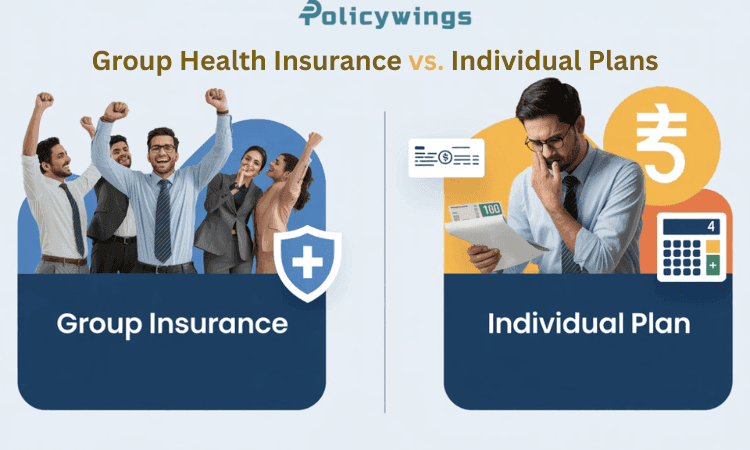
Group health insurance policies for employees is a main part of employer benefit plans in India. Companies with more than ten employees are required to offer a group medical insurance plan as per the rules established by Insurance Regulatory and Development Authority of India (IRDAI) and Employee’s State Insurance (ESI). This developing change is considered not only compliance but also changing legal requirements and employee expectations. Why Group Health Insurance Is a Legal Essential The social security framework in India is regulated by multiple interconnected laws: The Employee State Insurance Act of 1948 requires coverage for employees in the organised sector with an earning up to INR 21,000 per month. A. The employer contributes 3.25% and the employee contributes 0.75% of the wages. B. Addresses medical care, illness, injury, maternity, disability, family pensions and funeral costs. Insurance Act of 1938 and regulations set forth by the IRDAI A. The IRDAI regulates the terms, pricing and transparency of group insurance as stipulated in Section 34 of the Insurance Act. B. On 1 April 2020, the IRDAI mandated insurers to implement affordable group health plans for organisations returning to operations after the pandemic. Code on Social Security, 2020 Consolidates Employee State Insurance (ESI), Employee’s Provident Fund (EPF), gratuity, maternity benefits and other related benefits into a single framework. Mandatory Coverage: Who & What? Employers with ten or more employees not covered by ESI are required to provide group medical insurance in accordance with the IRDAI circular. Employers subject to ESI are not required to provide supplementary group plans as long as ESI coverage remains in effect. Employees with a monthly income exceeding INR 21,000 who are not covered by ESI but are legally required to obtain group health insurance (GHI) as an alternative. Important Legal Obligations for Employers Obligations of care within common law and statutory frameworks Employers are obligated to ensure workplace health and safety and a responsibility that is both implied in contracts and reinforced by legislation such as the OSH Code 2020. Adherence to the terms set forth by the IRDAI policy The IRDAI mandates disclosures regarding premiums and establishes timelines for claim settlements and even outlines channels for grievance redressal. Insurers are required to provide transparent contracts. Consequences for failure to comply Failure to offer required coverage may attract fines, imprisonment, loss of business licence and reputational harm. Important Differences Between Individual and Group Health Insurance Structure and cost sharing Group policies: employers pay all or part of the premiums; bulk bargaining can lower expenses. Individual: employee paid with modifiable coverage. Scope of coverage Group: includes COVID-19 care, maternity, OPD, ambulance, hospitalisation and pre-existing conditions (often immediate). Individual: may initially rule out pre-existing conditions; requires customised add-ons. Portability Group health plans are subject to IRDAI portability rules which provide continuity in the event of an insurer change. Legal Precedents & Contractual Implications The UK Court of Appeal looked at implied employer duties in insurance benefit plans in Crossley v. Faithful & Gould (2004). Group insurance provisions must be explicitly incorporated into employment contracts in India, with any ambiguities being settled in the worker’s favour in accordance with the rules of contract law. Best Practices for Implementing Group Health Insurance Clarity of eligibility In employment agreements and policy wording which specify covered employees (permanent, contract and trainees). Sufficient levels of sum insured In order to improve retention which is to take into account medical inflation and if possible include parent or family coverage. When appropriate smooth integration with ESI Make sure covered employees are properly identified while avoiding redundant coverage. Audits and policy renewals Engage the finance and human resources and legal departments in yearly reviews of the claims ratio, exclusions and renewals. Communication among employees and the resolution of grievances As required by IRDAI notification has to be sent to staff members of benefits and claim procedures and keep track of grievances. Benefits and Strategic Importance Attracting talent and increasing productivity According to studies insured workers are more dedicated and can take fewer sick days and work longer. Tax advantages Employees benefit from Section 80D deductions for individual health plans and premiums are deductible business expenses. Social and moral accountability Encouraging employee health is in line with Environmental, Social and Governance (ESG) objectives and shows corporate citizenship. Conclusion Employee group insurance is backed by corporate health insurance plans and has transitioned from optional perk to legal imperative in India. The dual framework of ESI Act and IRDAI regulations compels organisations especially those with ten or more employees to implement robust health coverage mechanisms. Employers should view these not as merely statutory burdens but strategic tools to foster wellbeing, loyalty and resilience. Legal perspective: Make policies in accordance with the Code on Social Security 2020 the Insurance Act of 1938 and IRDAI guidelines. Include provisions pertaining to health insurance in employment contracts. To prevent statutory penalties and to keep an eye on compliance. Make use of health benefits to boost output and brand recognition.

Written bySagar NarangPublished onSeptember 29, 2025
A Breakdown of Group Health Insurance for Your EmployeesGroup Insurance

A Breakdown of Group Health Insurance for Your Employees

Introduction Employee group insurance and corporate health insurance plans have become essential components of employer benefits programs in India, particularly following 2020. Organisations with more than 10 employees are required to offer a group medical insurance plan in accordance with IRDAI and ESI regulations. This transition signifies not only compliance but also the changing landscape of legal obligations and employee anticipations. Why Group Health Insurance Is a Legal Essential The social security framework in India is regulated by multiple interconnected laws: The Employee State Insurance Act of 1948 mandates coverage for employees in the organised sector with earnings up to INR 21,000 per month. A. The employer contributes 3.25% and the employee contributes 0.75% of wages. B. Addresses medical care, illness, injury, maternity, disability, family pensions, and funeral costs. Insurance Act of 1938 and regulations set forth by the IRDAI A. The IRDAI regulates the terms, pricing, and transparency of group insurance as stipulated in Section 34 of the Insurance Act. B. On 1 April 2020, the IRDAI mandated insurers to implement affordable group health plans for organisations returning to operations after the pandemic. Code on Social Security, 2020 Consolidates Employee State Insurance (ESI), Employee’s Provident Fund (EPF), gratuity, maternity benefits, and other related benefits into a single framework. Mandatory Coverage: Who & What? Employers with ten or more employees not covered by ESI are required to provide group medical insurance in accordance with the IRDAI circular. Employers subject to ESI are not required to provide supplementary group plans as long as ESI coverage remains in effect. Employees with a monthly income exceeding INR 21,000, who are not covered by ESI, are legally required to obtain group health insurance (GHI) as an alternative. Core Legal Obligations for Employers Obligations of care within common law and statutory frameworks Employers are obligated to ensure workplace health and safety, a responsibility that is both implied in contracts and reinforced by legislation such as the OSH Code 2020. Adherence to the terms set forth by the IRDAI policy The IRDAI mandates disclosures regarding premiums, establishes timelines for claim settlements, and outlines channels for grievance redressal. Insurers are required to provide transparent contracts. Consequences for failure to comply Failure to offer required coverage may attract fines, imprisonment, loss of business licence, and reputational harm. Important Differences Between Individual and Group Health Insurance Structure and cost sharing Group policies: employers pay all or part of the premiums; bulk bargaining can lower expenses. Individual: employee paid, with modifiable coverage. Scope of coverage Group: includes COVID-19 care, maternity, OPD, ambulance, hospitalisation, and pre-existing conditions (often immediate). Individual: may initially rule out pre-existing conditions; requires customised add-ons. Portability Group health plans are subject to IRDAI portability rules, which provide continuity in the event of an insurer change. Legal Precedents & Contractual Implications The UK Court of Appeal looked at implied employer duties in insurance benefit plans in Crossley v. Faithful & Gould (2004). Group insurance provisions must be explicitly incorporated into employment contracts in India, with any ambiguities being settled in the worker’s favour in accordance with the rules of contract law. Best Practices for Implementing Group Health Insurance Clarity of eligibility In employment agreements and policy wording, specify covered employees (permanent, contract, and trainees). Sufficient levels of sum insured In order to improve retention, take into account medical inflation and, if possible, include parent or family coverage. When appropriate, smooth integration with ESI Make sure covered employees are properly identified while avoiding redundant coverage. Audits and policy renewals Engage the finance, human resources, and legal departments in yearly reviews of the claims ratio, exclusions, and renewals. Communication among employees and the resolution of grievances As required by IRDAI, notify staff members of benefits and claim procedures and keep track of grievances. Benefits and Strategic Importance Attracting talent and increasing productivity According to studies, insured workers are more dedicated, take fewer sick days, and work longer. Tax advantages Employees benefit from Section 80D deductions for individual health plans, and premiums are deductible business expenses. Social and moral accountability Encouraging employee health is in line with Environmental, Social, and Governance (ESG) objectives and shows corporate citizenship. Conclusion Employee group insurance, backed by corporate health insurance plans, has transitioned from optional perk to legal imperative in India. The dual framework of ESI Act and IRDAI regulations compels organisations especially those with ten or more employees to implement robust health coverage mechanisms. Employers should view these not as merely statutory burdens but strategic tools to foster wellbeing, loyalty, and resilience. Legal perspective: Create policies in compliance with the Code on Social Security 2020, the Insurance Act of 1938, and IRDAI guidelines. Include provisions pertaining to health insurance in employment contracts. To prevent statutory penalties, keep an eye on compliance. Make use of health benefits to boost output and brand recognition.

Written byRahul NarangPublished onAugust 28, 2025