Top Benefits of Group Health Insurance for Small Business

By Rahul Narang
Top Benefits of Group Health Insurance for Small Business

To be successful, small businesses must look after their staff. Providing group health insurance is one of the best ways to achieve this. It ensures that workers maintain their health and productivity by offering them reasonably priced health insurance.

Table of Contents

Toggle

Providing group health insurance is one of the best ways to assist staff members. It guarantees that workers have access to high-quality medical care without facing financial hardship by offering reasonably priced healthcare coverage.

Investing in group health insurance for small businesses offers financial benefits like tax advantages, improves the company’s reputation, and helps recruit top talent. It’s not just about protecting employees. Group health insurance is now a crucial component of employee benefits in India, where healthcare expenses are on the rise.

In this blog we will discuss the benefits of group health insurance, why it’s a great option for small businesses, and how it can help them succeed in the long run, particularly in the Indian market.

What is Group Health Insurance?

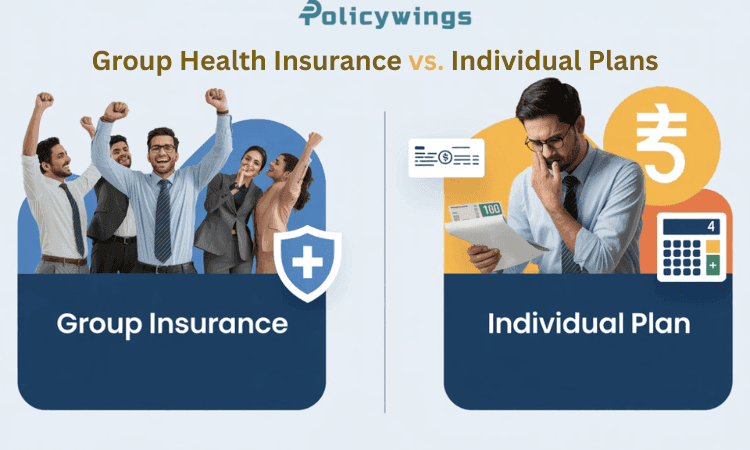
A single policy that covers several employees under a single plan is known as group health insurance. Group health insurance is offered by the employer to all qualified workers, as opposed to individual health insurance, which is purchased separately for each person. Through this blog we will discuss effective benefits of Group Health Insurance

The Reasons Behind Small Businesses’ Selection of Group Health Insurance

  • Savings: Compared to individual plans, group plans have cheaper premiums.
  • Improved Benefits: Provides coverage for maternity care and hospitalization, among other healthcare services.
  • Employee Retention: Assists companies in luring and retaining skilled workers.

Important Advantages of Small Business Group Health Insurance

  1. Reasonably priced premiums

Cost-effectiveness is one of the main benefits of group health insurance. Insurers provide cheaper premiums than individual policies because the risk is divided among several employees. Because of this, it’s a cost-effective choice for small businesses looking to offer high-quality healthcare benefits without breaking the bank.

  1. Improves Retention and Employee Satisfaction

Today’s employees value security and peace of mind benefits more than a salary. Employee financial stress is decreased by a group health insurance policy, which guarantees that medical costs will be paid for.

Employees are more satisfied with their jobs when they feel appreciated and supported. Higher retention rates result from this, which lowers the expenses and inconveniences related to frequent hiring and training.

  1. Employers’ Tax Benefits

Offering group health insurance has financial benefits for employers in addition to benefits for employees. Under the Income Tax Act, companies in India are able to deduct the cost of employee health insurance premiums from their taxes. Because it lowers total tax obligations, group health insurance is a wise investment.

Incentives are also provided by some states and government initiatives to companies that offer health insurance to their workers. Small businesses can reinvest their savings into employee welfare initiatives, business expansion, or other operational enhancements by utilizing these tax advantages and even is one of a group health insurance benefits

  1. Extensive Protection

In contrast to basic individual plans, group health insurance provides a wide range of coverage, such as:

  • Costs associated with hospital stays
  • Conditions that already existed
  • Benefits of maternity
  • Services for preventive healthcare
  1. Increases Efficiency and Reduces Non Appearance

Healthy workers are more productive at work because they take fewer sick days. Having access to high-quality medical care guarantees that workers heal more quickly and resume work sooner.A healthy workforce is a productive one. By ensuring that workers receive timely medical attention, group health insurance helps to keep minor health issues from becoming serious ones and it is one of  the group health insurance benefits

Group Health Insurance in India

Because of government incentives and growing awareness, group health insurance is becoming more and more popular among small businesses in India.

Important aspects of Indian group health insurance include:

  • IRDAI Regulations: Guarantee openness and equitable practices.
  • Pre-existing Conditions Covered: The majority of group health insurance plans in India cover pre-existing illnesses from the start, in contrast to individual plans.
  • Affordable and Adaptable: Companies can select plans that meet the needs of their staff and their budget.
  • Digital Policy Management: Employee enrollment and claim management are made simpler by online platforms.

How to Select the Best Plan for Group Health Insurance?

  1. Coverage Details

Make sure pre-existing conditions, outpatient care, maternity benefits, and hospitalization are covered by the plan. A thorough policy makes it possible for staff members to obtain necessary medical care without facing financial hardship.

  1. Benefits versus Cost

Examine several insurance providers to identify a plan that provides adequate coverage at reasonable premiums. Steer clear of expensive plans with superfluous features or extremely cheap plans that might not offer essential benefits.

  1. System of The Hospital

To give staff members simple access to high-quality medical care, pick an insurer with a sizable network of cashless hospitals. A larger network lowers treatment costs out of pocket.

  1. Customization Choices

Seek out plans that let companies add wellness, dental, or vision benefits. Employees are guaranteed to receive the most pertinent healthcare coverage thanks to customizable options.

  1. Ratio of Claim Settlement

For quick and easy claim processing, pick an insurer with a high claim settlement ratio. This guarantees that workers receive medical care without any delays or difficult processes.

Policy Wings – Your Partner For The Right Insurance Plan

It can be difficult to choose the best group health insurance plan, but Policywings makes it simple. Policywings assists small businesses in choosing the best insurance plan for their employees by providing professional advice, a large selection of insurers, and tailored solutions. Policywings guarantees a seamless and knowledgeable decision-making process, regardless of your needs whether they are for affordable coverage, wide hospital networks, or easy claim processing. 

How Group Health Insurance Can Be Adopted by Small Businesses

Effective group health insurance implementation guarantees that workers receive the most benefits while streamlining the business process. Here are important actions to take:

  1. Training for Employees

Organize workshops and awareness campaigns to go over the network hospitals, benefits, coverage, and claim procedure. Employees are more likely to use their health insurance plan efficiently and make wise healthcare decisions when they are aware of it. 

  1. Easy Enrollment

Utilize HR tools and digital platforms to streamline and expedite the registration process. Reduce paperwork and confusion by making sure staff members receive the right instructions on how to enroll, update their information, and add dependents.

  1. Encourage Preventive Care

Promote wellness programs, free health check-ups, vaccination drives, and mental health support. Preventive care reduces long-term healthcare costs and keeps employees healthier, leading to fewer sick days and improved productivity.

  1. Review Every Year

Regularly assess the insurance plan based on employee needs, policy upgrades, and business budget. Adjust coverage options, add benefits, or switch providers if necessary to keep the plan relevant and beneficial for both employees and the company.

Conclusion

For small businesses, offering group health insurance is a smart investment. It increases workplace productivity, guarantees employee well-being, and lowers business expenses through tax advantages. Businesses can establish a safe and healthy workplace by selecting the appropriate plan.

Finding the ideal group health insurance plan for small businesses is made simpler by Policywings, which provides professional advice and customized solutions. Policywings offers group health insurance india with a lot of options and a smooth selection process to guarantee that companies receive the best healthcare benefits for their employees while also getting the most value.


Share this article:

More on Group Insurance

Hand-picked reads on group insurance to help you decide with confidence.

Overseas Travel Medical Insurance: Emergency Healthcare AbroadHealth Insurance

Overseas Travel Medical Insurance: Emergency Healthcare Abroad

Introduction Travel is exhilarating but medical emergencies abroad are expensive and unpredictable. For Indian travellers, buying robust overseas travel medical insurance before boarding is not optional if your destination or visa requires it and it’s strongly recommended in every other case. This article explains what international travel health insurance covers, what to check in policy wordings and the recent regulatory and entry rule updates you must know before you fly. What “overseas travel medical insurance India” covers Overseas travel medical insurance (also called international travel health insurance or medical insurance for abroad travel) typically includes: Emergency medical treatment and hospitalisation abroad (up to the sum insured). Medical evacuation and repatriation of remains. Emergency dental treatment for acute pain. 24/7 assistance and case management (hospital referrals, direct billing help). Optional add ons: trip cancellation/ interruption, lost baggage, personal liability and adventure sports cover. Always confirm limits for hospitalisation, in patient vs out patient care and whether medical evacuation is included or subject to separate approvals. Visa and entry requirements you must meet Several countries require proof of visa compliant travel medical insurance at application or entry. The Schengen Area, for example, still requires a minimum emergency medical coverage of €30,000 covering repatriation and urgent hospital treatment and the policy must be valid for the entire stay. Many embassies list approved wording or insist on a specific territorial scope (e.g., worldwide excluding the traveller’s country of residence). Note: Some countries control health access through immigration fees or surcharges (e.g., the UK’s immigration health surcharge for certain visa types), which is separate from private travel insurance and may still apply even if you hold private cover. Indian regulatory context and recent updates Insurance products sold in India (including overseas travel policies) fall under the Insurance Regulatory and Development Authority of India (IRDAI). IRDAI’s health department publishes master circulars, product guidelines and model wordings that insurers use to design travel products; a formal overseas travel policy wording and master travel policy documents are available on the IRDAI portal. Insurers must adhere to these standards when offering travel medical cover from India. While there is heightened regulatory attention on product standardisation, as of October 2025 there is no blanket government mandate that every Indian leaving the country must purchase a single standard travel policy however, IRDAI guidance and master circulars shape minimum disclosure, claims handling and policy wording that affect what insurers sell and how claims are processed. Always check the insurer’s policy wording and IRDAI circulars for updates before purchase. Practical points when buying medical insurance for abroad travel Buy before departure visa processing often expects the policy to be active for the whole trip. Check the territorial cover and currency (Schengen accepts EUR; many embassies want specific currency equivalence). Verify evacuation & repatriation limits these costs can be enormous and are the primary reason to choose a higher medical limit. Declare pre-existing conditions and read waiting periods; nondisclosure can void claims. Confirm direct billing or cashless arrangements with the insurer’s assistance partner. Check pandemic/COVID clauses many insurers continue to offer COVID treatment cover but terms vary. Claims, documentation and assistance Keep digital and printed copies of: Policy certificate and emergency assistance number. Hospital invoices, medical reports, prescriptions and scans. Police reports (for accidents), airline PIR (Property Irregularity Report) for baggage loss and any embassy/consulate correspondence if needed. Contact the insurer’s 24/7 assistance team before receiving treatment where possible some policies require the assistance provider’s pre approval for evacuation or hospital admission. New entry/processing systems that matter to travellers The EU Entry/Exit System (EES) and related rollouts (and the future ETIAS waiver) have changed border checks across many European ports during these checks travellers may be asked routine questions about accommodation, return tickets and insurance. Although EES itself does not create new insurance requirements, it has increased the likelihood that border officials will query travellers about whether they hold travel insurance which highlights the importance of carrying proof of valid cover. Who should consider higher limits or specialised cover? Long stay students and expatriates (consider student or expatriate health plans). Travellers to remote or high cost countries (USA/Canada require high cover due to medical costs). Adventure travellers ensure sports/activities are covered. Senior travellers or those with multiple pre existing conditions specialised senior travel plans often include higher premiums and specific underwriting. Final checklist Read the policy wording end to end to know exclusions and waiting periods. Ensure sum insured and repatriation limits meet your destination’s requirements. Buy visa compliant cover if your destination mandates it (Schengen and several others). Carry both digital and paper copies; save the assistance number in your phone. Contact Policywings for tailored comparisons if you have specific needs (long stays, pre-existing conditions or adventure activities). Overseas medical emergencies are both traumatic and expensive. Having the right international travel health insurance turns a potentially ruinous bill into a manageable claim and ensures you get timely medical help and repatriation when needed. If you’re planning a trip, start with destination specific requirements and the insurer’s assistance network and choose cover that gives you practical, on ground support not just a promise on paper.

Written byRahul NarangPublished onDecember 15, 2025

Explore: Business Insurance

Broaden your view with a quick read on business insurance.

Mergers & Acquisitions in India: Managing Transaction RisksBusiness Insurance

Mergers & Acquisitions in India: Managing Transaction Risks

Introduction Mergers & Acquisitions Insurance in India also known as transactional risk insurance has evolved as an important tool for deal makers to evaluate and decrease risk in complicated M&A transactions. What is M&A Insurance(Transaction Risk Insurance) M&A insurance (Transaction risk insurance) refers to the policies that protect parties in a merger or acquisition from losses arising from certain transaction risks. These include breaches of representations & warranties (R&W), undisclosed liabilities (e.g. tax liabilities), environmental or regulatory risks or other post closing liabilities. Parties use insurance to shift certain risks to insurers, reducing exposure, improving certainty and often facilitating effortless deal closure which is way better than only relying on contractual indemnities. More Usage of M&A Insurance in India Speed and planning: Caps and escrow can be simplified because insurance can replace or support seller indemnities and claim negotiations. More competitive insurance market: Premiums are now more competitive. Insurers provide broader coverage which makes it possible for smaller deals with lower enterprise value to get insured. M&A Insurance: Legal & Regulatory Structure Insurance Regulatory & Development Authority of India (IRDAI): The regulator for insurance business. Any transactional risk insurance policy will be under its supervision. Insurance Act 1938 and IRDAI Act 1999: The Insurance Act manages insurance contracts. The IRDAI Act controls regulation of insurers including registration, solvency, conduct of business, disclosures, etc. Proposed Insurance Laws (Amendment) Bill 2024: In 2024, the Indian government has proposed extensive amendments to the Insurance Act and IRDAI Act. These may influence rules for registration, operational matters and risk allocation regulations. Parties using M&A insurance should look out for these developments. Company Law, Securities Law & FDI Regulations: M&A usually involves regulated sectors, foreign investment, securities rules (example for listed companies), disclosure obligations and antitrust/competition law (example CCI approval). This establishes what risks are insurable, what exposures must be disclosed and the drafting of R&W. Recent Changes & Compliance Trends India’s regulatory and legal environment has seen changes that affect how transaction risk insurance is used, structured and enforced: Use of ‘buy side’ policies is more common: In general, the seller side has warranty/indemnity risk. Increasingly, buyers are getting insurance to cover their post closing claims if the seller fails to perform. Following international rules: Indian companies and insurers are changing policy wordings, jurisdiction rules and coverage to reflect global standards as international transactions are rapidly rising. Law firms and brokers also play an important part in customising these policies. Litigation and regulator: Regulators like IRDAI, tax, environmental and data protection authorities are paying closer attention. Hidden or undisclosed liabilities like tax or environmental issues have caused recent claims and this makes compliance and full disclosure very important. M&A Insurance Policies Structure Parties should consider these following points to manage transaction risks effectively using M&A insurance: Scope of coverage: What representations & warranties are insured, which liabilities are excluded (example known risks, fraud or certain regulatory risks). Negotiating timelines for disclosure. Retention/deductible: How much amount of risk remains with the seller or buyer affects premium and enforceability. Policy limits & claims period: How long after closing can claims be made (it’s usually between 2 to 4 years) or What is the maximum amount of money that can be lost. Tail or run off coverage: After the deal for the seller side, there could be liabilities that can come up later and buyers may require sellers to maintain certain insurance or give indemnity for a period or insurance companies might offer tail coverage. Change in control clauses: Many policies include clauses that modify coverage if the corporate structure changes significantly (postmerger) or after acquisition to prevent coverage gaps. Disclosure and due diligence: The quality of due diligence directly influences risk perception. Misstatements or omissions can result in claim denials. Comprehensive information exposure helps minimise insurer objections. Recent or Emerging Legal Risks & Must Knows Tax liability & DTAA clauses: With international transactions, tax treaties (Double Taxation Avoidance Agreements) and local Indian tax regulations pose potential undetected liabilities. Insurers may require enhanced disclosure. Data Privacy / Cybersecurity Laws: Upcoming laws in India (like Data Protection Bill, etc.) maximise liability exposure for companies and insurers are increasingly enquiring about compliance with such laws. Failure in this area may result in uncovered losses. Benefits vs Challenges Benefits: Decreases post closing risk for buyer and seller. Facilitates in faster closings when contractual risk problems are insured. Increases credibility with external investors or lenders. Challenges: Cost of premiums (particularly for complicated or high risk sectors). Time and negotiation required to agree on policy wording, procedure of disclosures. Insurers may deny covers for specific known but not fully disclosed risks. Possible overlap, dispute or conflict with other insurance, indemnities or warranties. Conclusion M&A insurance (transactional risk insurance) has become a foundation of India’s transaction framework. Buyers and sellers negotiate with greater confidence, shorten timelines and unlock transactions by transferring critical risks to insurers which otherwise might delay or obstruct operations. To increase its value, dealmakers have to stay alert for regulations developments, structure policies carefully and coordinate insurance coverage with industry regulations.

Written byRahul NarangPublished onNovember 25, 2025
Business Interruption Insurance Can Save Your Company TodayBusiness Insurance

Business Interruption Insurance Can Save Your Company Today

Introduction A solid risk management plan has to have both business interruption and loss of income insurance which gives a safety net in case of unexpected situations. Whether it’s by supply chain disruptions, legal closures, cyberattacks or natural hazards/disasters this coverage protects businesses from revenue loss and also keeps all things stable while they are recovering. Understanding Business Interruption Insurance When operations are halted because of covered events, business interruption insurance reimburses a company for lost revenue and additional costs. Standalone policies concentrate exclusively on the financial effects of operational stoppages even though they are frequently an addition to property insurance. Usually covered are: Replacement of Gross Income: Makes up for money lost during the disruption. Payroll utilities and rent are examples of continuous commitments that are supported by fixed cost coverage. Extra Expense Coverage: Provides coverage for extra expenses (such as temporary relocation and emergency services) required to resume operations more quickly. This policy is income dependent which means that the indemnity is correlated with actual business losses and necessary expenses in contrast to other insurance types that pay fixed benefits. Legal and Regulatory Context in India Regulatory frameworks highlight the significance of business interruption insurance in industries such as banking healthcare and critical infrastructure despite the fact that it is not required in India. The terms and issuance of such policies are governed by the Insurance Act of 1938 and IRDAI guidelines which guarantee coverage standards and claims procedures. Furthermore the principles of indemnity and loss mitigation are applicable under Sections 73 and 74 of the Indian Contract Act 1872. Policyholders are required to minimise losses properly document claims and refrain from taking risks following a covered event. Why Companies Often Underestimate Its Importance When business stops, organisations usually concentrate on protecting their physical assets while ignoring the hidden financial strain. Long periods of downtime however can quickly deplete reserves and result in financial difficulties, supplier default or even insolvency. This gap is filled by business interruption coverage which aids in preserving liquidity during crucial times. Real World Lessons That Emphasize Its Value Natural Disasters: Businesses without this coverage regularly find themselves unable to cover operating costs in areas hit by earthquakes or floods which can result in bankruptcy even if physical damage is repaired. Cyber and Systems Failures: Operations/functions can be rapidly shut down by a ransomware attack or an extended IT outage. Such occurrences are usually not covered by standard property policies which emphasises the necessity of specific interruption coverage catered to digital risks. Regulatory Shutdowns: Government mandated closures like lockdowns for health emergencies or halts for environmental compliance can severely reduce revenue. Companies with interruption insurance are better equipped to withstand mandated outages. Two startling facts emerge from these situations: insurance terms need to be exactly in line with business realities and not having coverage is not just dangerous it could be disastrous. Policy Design: Legal Considerations and Best Practices Clearly Define the Covered Events Cyberattacks, pandemic closures and civil unrest may not be covered by standard policies. Indian companies are required to evaluate their risks and negotiate extensions particularly with regard to “non-damage business interruption” which refers to risks that do not entail physical harm. Establish Sufficient Coverage Duration Usually indemnity periods last between 30 and 90 days but more extensive coverage may be needed for complex recovery operations like facility reconstruction or data restoration. Businesses should negotiate adequate “extended indemnity periods” in accordance with industry standards and risk assessments. Make Sure Your Revenue Estimate Is Correct In order to determine lost income insurers frequently need historical financial data. To substantiate claims and prevent disagreements, accurate documentation is crucial including daily sales records, supplier contracts and cost structures. Awareness of Exclusion Losses brought on by underinsurance government action or postponed maintenance may be excluded by many policies. To prevent rejection legal teams should carefully review the terms, offer advice on any coverage gaps and make sure that claims are started on time. Restore and Reduce Policyholders are required to take reasonable measures to quickly resume operations such as using alternate locations rerouting supply chains or implementing temporary workarounds. Under Section 73 of the Indian Contract Act courts have the authority to reject claims in cases where the loss could have been reasonably mitigated. The Financial Significance of Business Interruption Coverage Cash Flow Stabilisation: Even during extended pauses the indemnity guarantees that operational commitments such as rent loan repayments and salaries are fulfilled. Stakeholder Assurance: deals with the coverage of showing resilience promotes trust in lenders, suppliers, customers and investors. Competitive Advantage After a Crisis: Companies that can bounce back fast tend to gain market share, recover more quickly and come out stronger than their peers without insurance. Sector Specific Considerations Manufacturing and exporters should evaluate supply chain vulnerabilities and make sure that unreported losses aren’t caused by delayed shipments or damaged infrastructure. Retail and hospitality may experience abrupt declines in foot traffic or be forced to close. Continuity is ensured by coverage specific to business or physical interruption. IT and Digital Services: Data breach and digital downtime coverage are becoming more and more essential as cyber threats increase. Global Precedent: Singapore’s Circuit Breaker Case Businesses with “non-damage business interruption” policies were able to successfully claim losses even in the absence of physical damage during Singapore’s strict COVID-19 “circuit breaker” restrictions while many others with inadequate wording were not covered. This demonstrates how the wording of policies can make or break indemnity outcomes in disruptions caused by the government. Conclusion Even though they are frequently disregarded, business interruption and loss of income insurance can literally mean the difference between surviving and failing when operations are interrupted. This coverage serves as a strategic shield preserving long term resilience preserving solvency and safeguarding reputation. Companies can turn an insurance clause into a lifeline by carefully matching the policy wording with your business risks, making sure that the right paperwork is in place, negotiating suitable indemnity periods and proactively managing loss.

Written bySagar NarangPublished onDecember 9, 2025